Key points
- "I no longer believe, I know now that these tools are going to create massive opportunity for small teams."
- "You have to own whatever is being produced and use your own common sense and vetting."
- "Two people are all of a sudden able to produce the output and results of a 10 person, 20 person team as long as it's managed properly."
Read the transcript
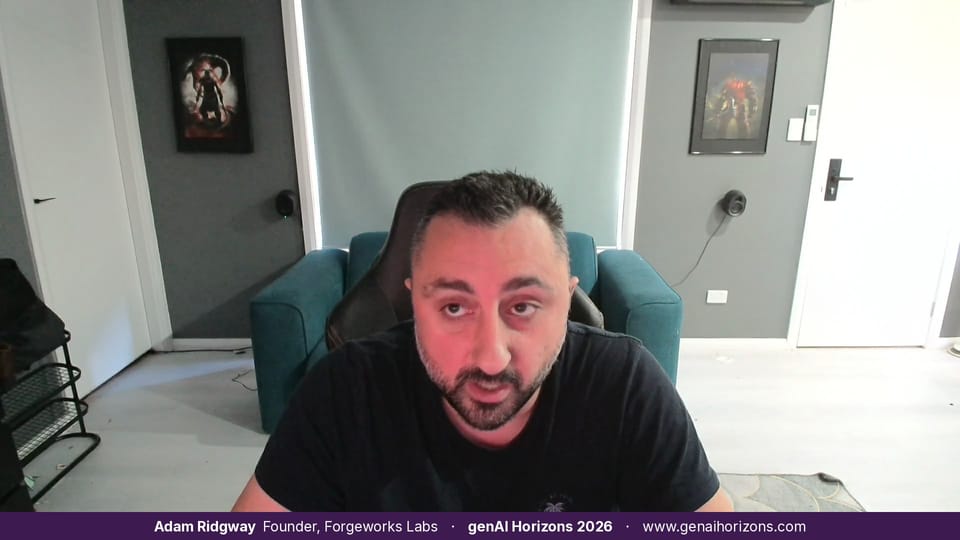
So the first thing I want to talk about is AI as a force multiplier for the tiny teams. I no longer believe, I know now that these tools are going to create massive opportunity for small teams comparative to the types of products that previously required larger teams.
What I've produced alongside Matt Cameron is not possible with a two-person team. It requires multiple historic skill sets across many disciplines that would not have been feasible for two individuals to execute.
What I mean by that is it's not just the amount of throughput and the amount of code and the amount of content you can create within that time. It's being able to coordinate all of those systems, manage all of the not just technical but strategic and product components, the aspects of running a product: setting up payment providers, the company, everything from the company payroll, contract negotiations. All of that previously required more people than it does today.
And that's simply because the AI tools are that reliable now. They're not perfect and the caveat to all of that is that you still have to always use your own discretion and discernment. You have to own whatever is being produced and use your own common sense and vetting.
But if you use the tools properly, it's a capability multiplier. So the more capable you are, the more these tools will multiply your own capabilities. And then two people are all of a sudden able to produce the output and results of a 10 person, 20 person team as long as it's managed properly.
 Sign in free to watch Adam Ridgway
"The more capable you are, the more these tools will multiply your own capabilities."